


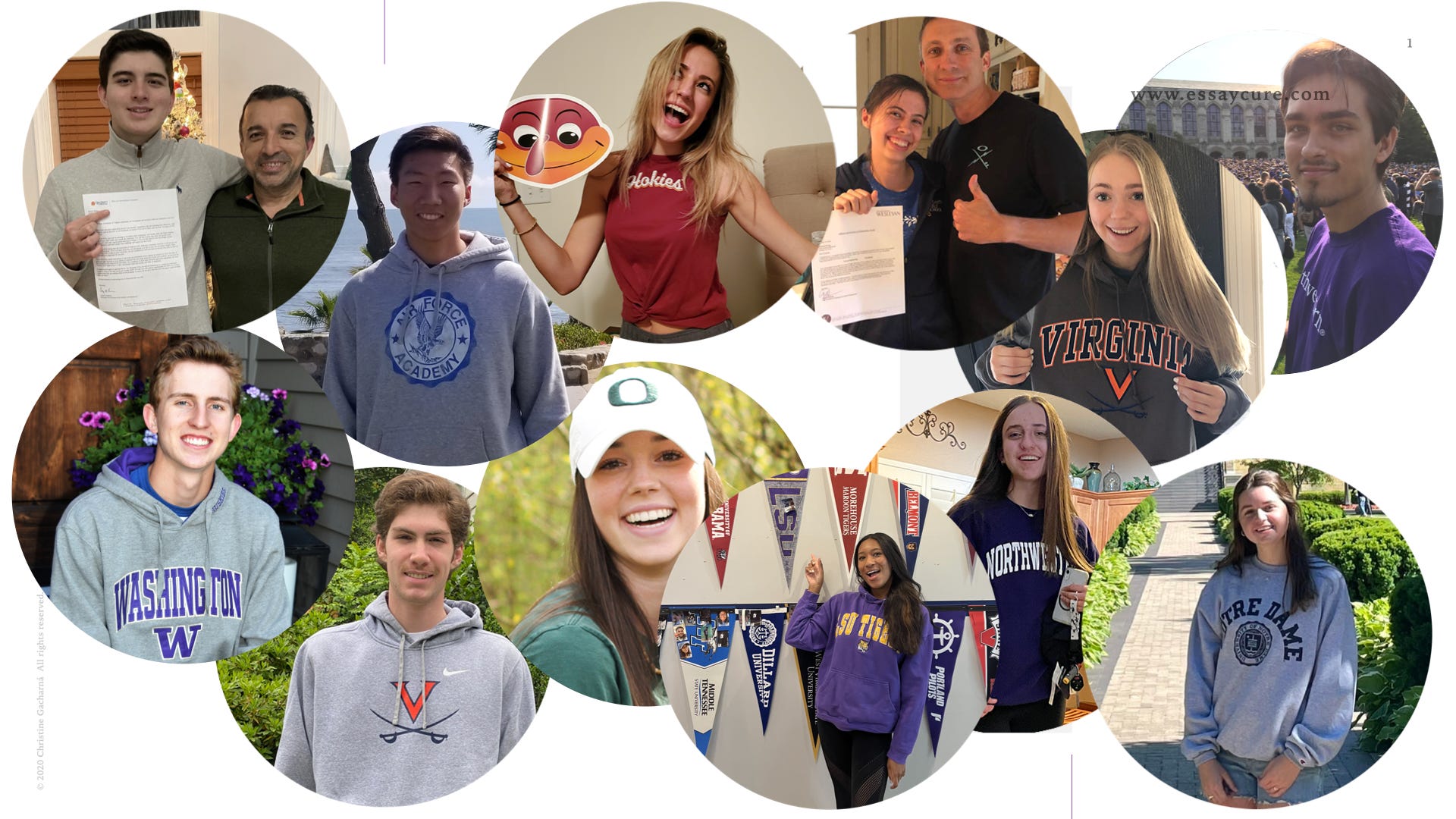
^^^ These are “my why.”
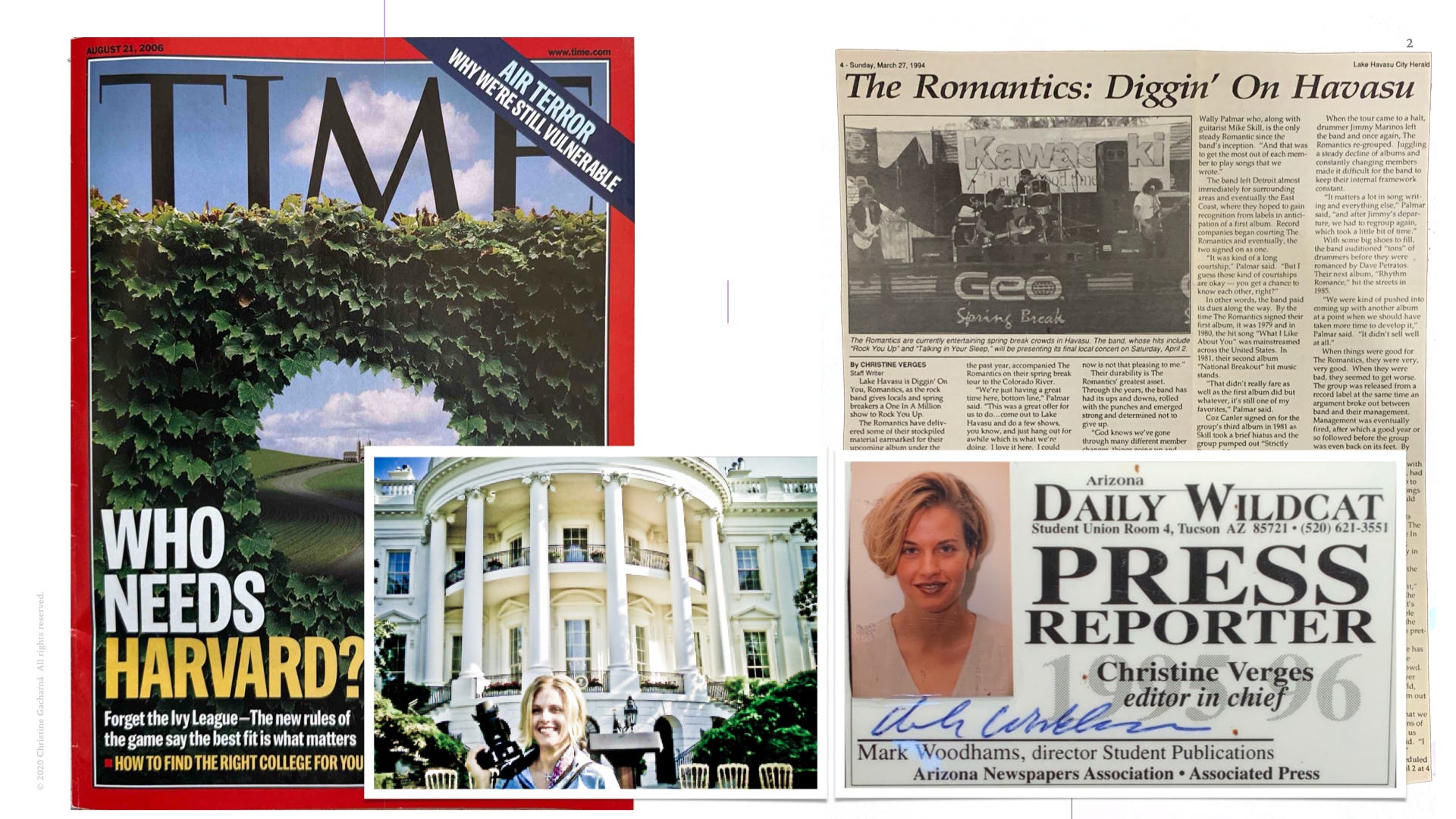
My background is editorial. I’m both a writer and a certified professional photographer; my work has appeared in newspapers and magazines nationwide as both a staff member and a freelancer. My editors used to call me a “twofer” because they could send me as the writer and photog.
Storytelling is a rhetorical mode that not many students are familiar with. It’s not something we use much in high school.
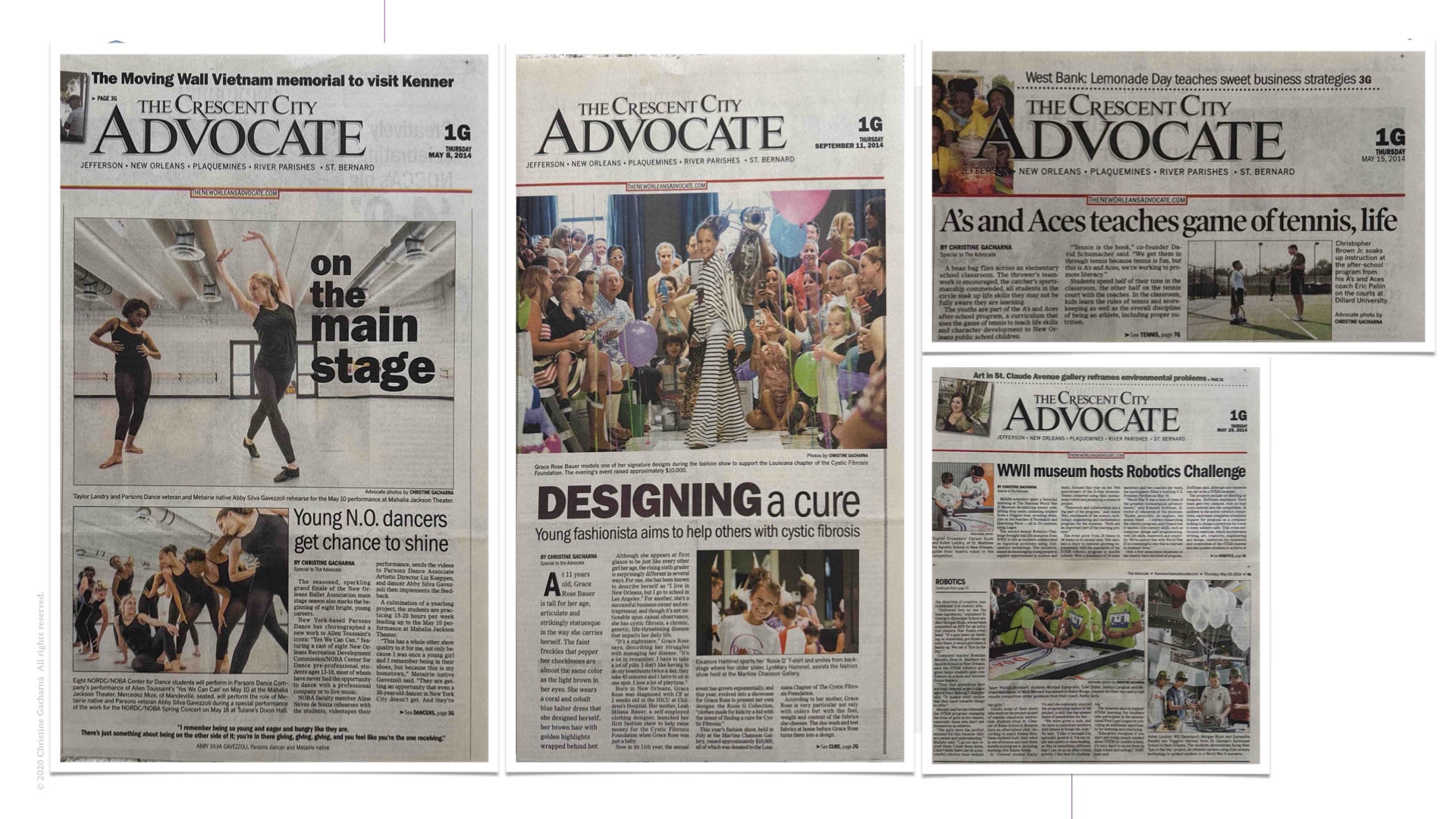
When my two kids were going through the college application process, I was working both as a freelance feature writer and photographer for the New Orleans Advocate,
and I was also the Lead Faculty for Communications, teaching undergraduates in COMM and English.
My kids, my kids’ friends, and my friends’ kids were all bringing me their college application essays. They were all making the same mistakes. That’s how I got involved in this work.
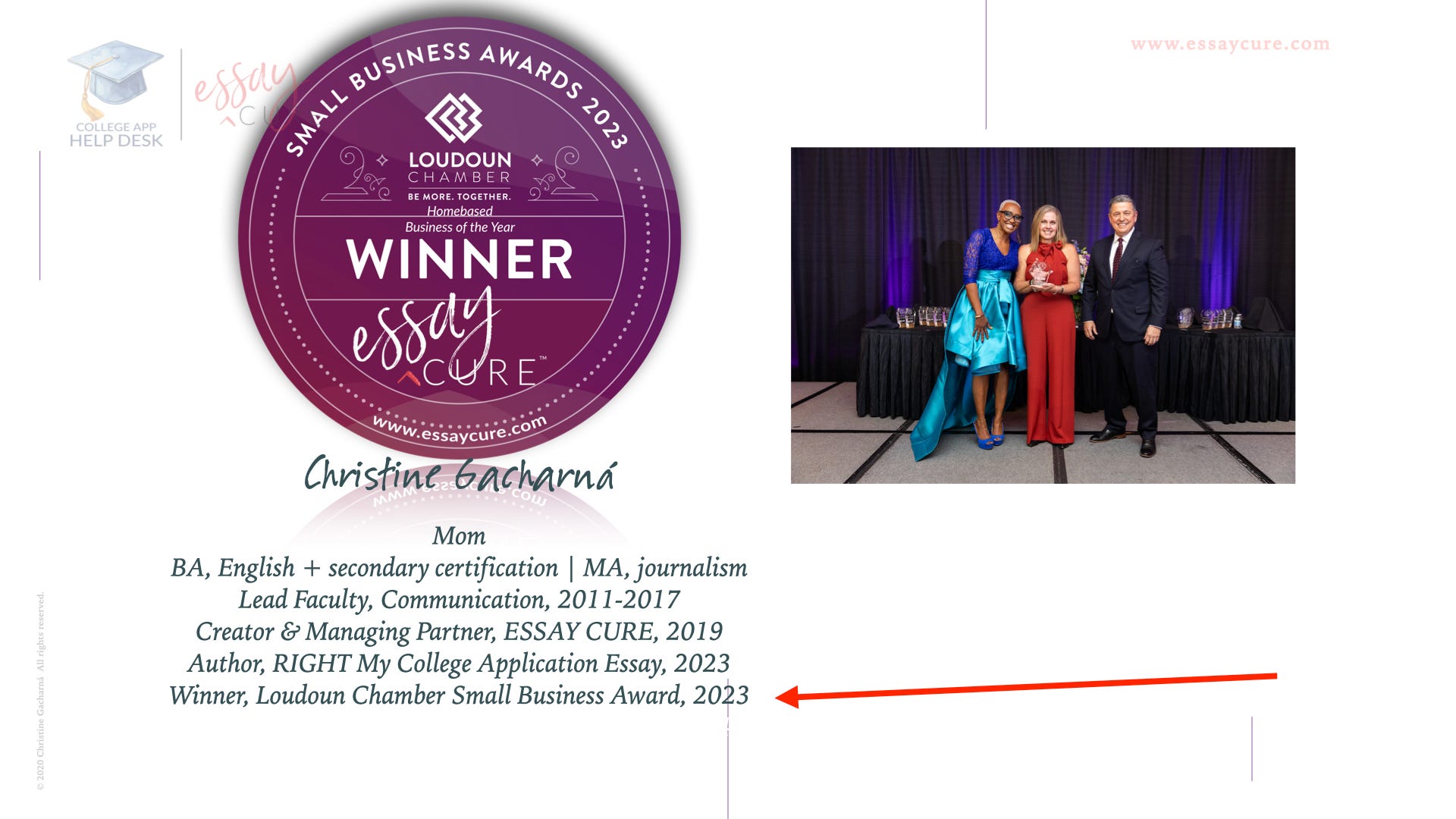
In 2023, I published a book and won the Loudoun (Virginia) Chamber Small Business Award.
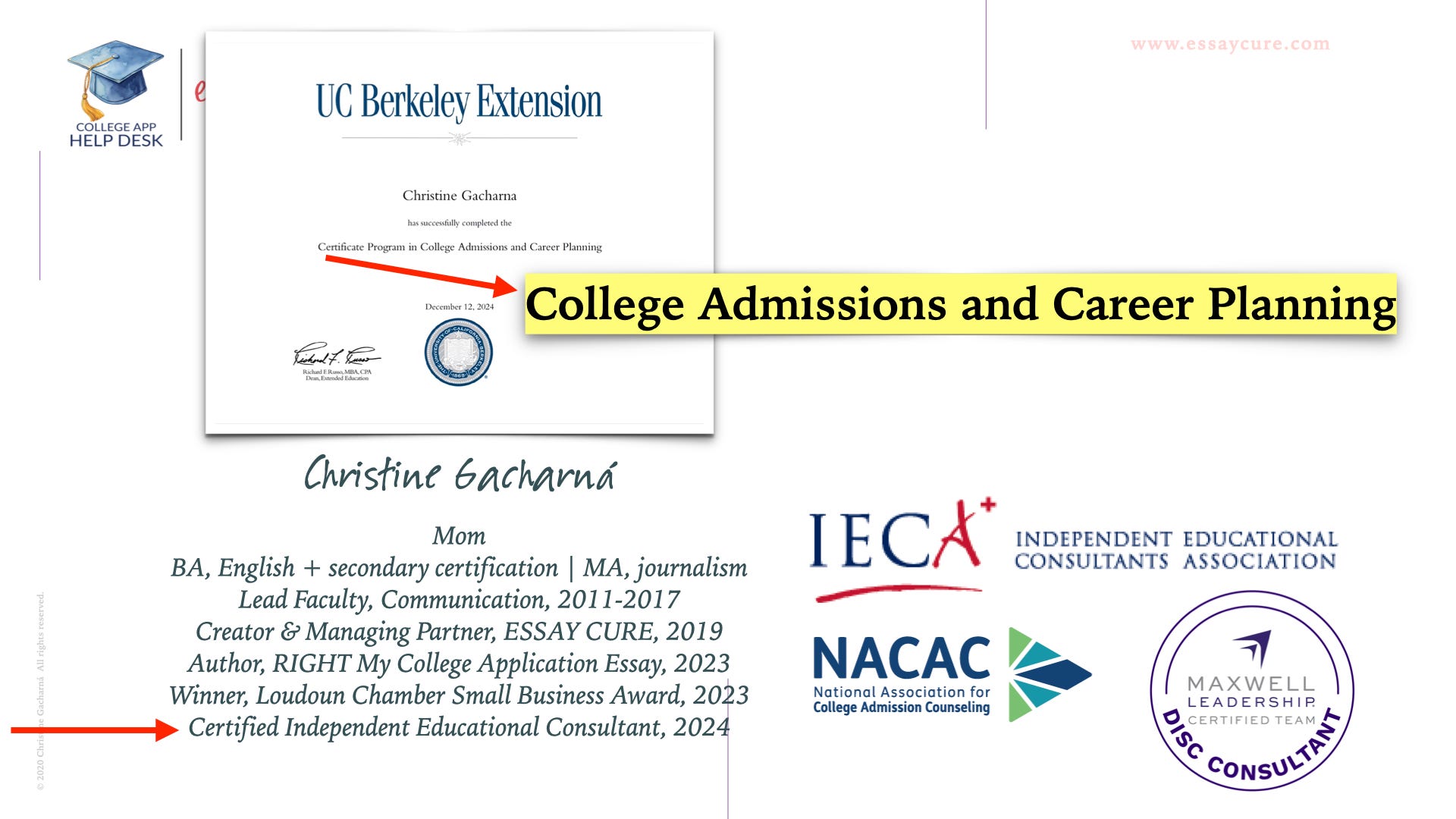
In 2024, I completed 16 graduate-level hours in college admissions and career planning at the University of California, Berkeley, and became a certified Maxwell DISC consultant and trainer.
The Student/Career Report assessment lists potential careers where a student’s strengths and interests might best serve them. I spend time talking with students about pursuing these interests before we start looking for strong colleges and universities that offer those programs.
Most academically qualified students come to me with one of two things: a list or an essay.
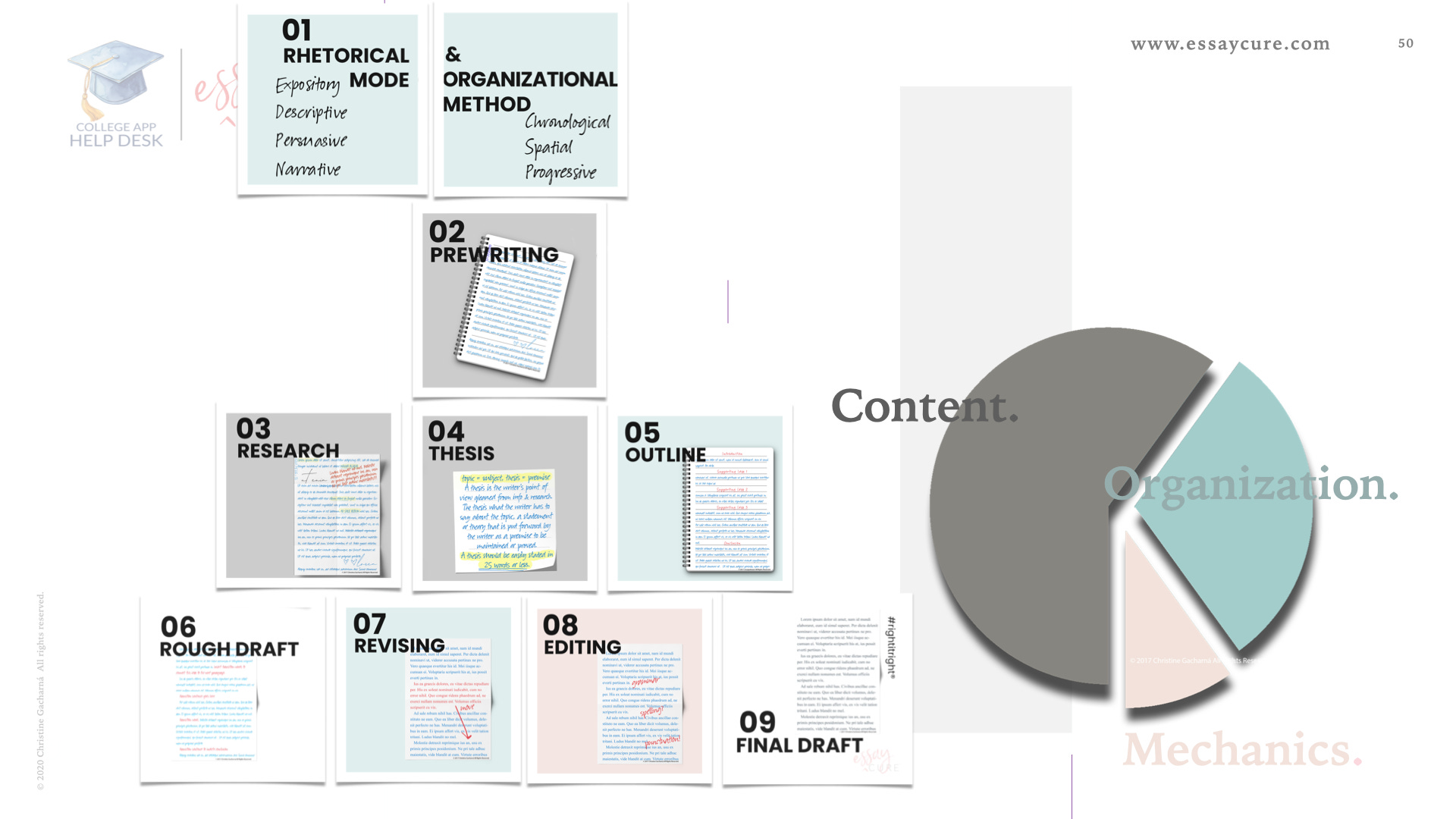
Students who come to me with an essay ask, “Will you edit this for me?” The problem with will you edit this for me, is that editing is the last step in the process. The college application essay is academic writing, and academic writing is a technical skill. While most students have mastered the five-point “hamburger” persuasive rhetorical mode in high school, they haven’t yet learned that the persuasive rhetorical mode is not the only rhetorical mode used in academic writing — and the catch-22 is that they likely will not learn this until they get to college, but first they have to get in!
I break down academic writing at the undergraduate level for high school students. I give them tools to make this work easier, so they never sit down to an essay assignment again and stare at a blank page.
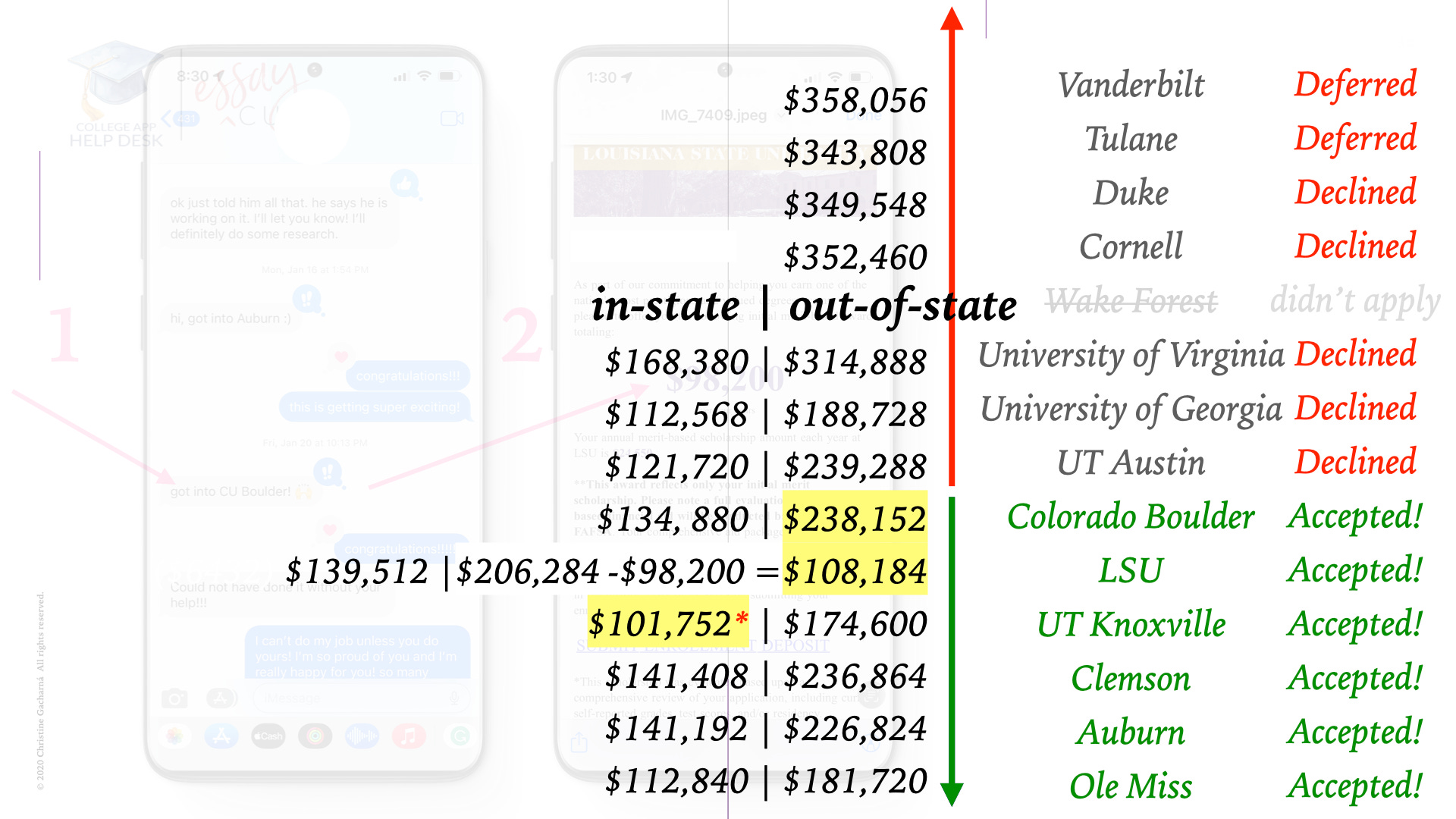
Students who come to me with a list often use words like “safety school.” I explain why I use words like “likely target, reach, unlikely.”
I use software that aggregates more than 30 years’ worth of admissions data. The software shows students where they stand relative to the larger pool of applicants, especially in this era of grade inflation. This is how we balance and strategize their list of schools they’ll apply to.
Unlike a photograph, a feature story, or even a college application essay, the numbers tell the story in this process. In a holistic admissions process, no single factor determines admission. A 6 percent acceptance rate does not equal a 6 percent chance of admission. The math is not cumulative. Applying to more highly selective schools does not increase a student’s chances of admission at any of them.
The college application process is a part-time job for students; it quickly becomes a full-time summer job for those who aspire to apply to more than one highly selective college or university (admissions rates below 30 percent, for example), just in writing the essays alone.
For most families, purchasing a college education is the third-largest expense after buying a home and saving for retirement.
My goal is to turn an admissions officer into an advocate through a college application essay, because when all other things are equal on paper, the essay is the one thing students have complete control over and can set them apart from tens of thousands of other applicants.
How do I do this? By showing students what I call The Steps in the RIGHTING Process; we make students jump off the page.
A college degree only yields a return on investment if the student graduates. Yet in 2025, one in four college freshmen did not return for their sophomore year.
Questions? Please schedule a Parent/Student Discovery session here.


