Every application season, high school seniors and their parents get caught up in the high-stakes game of college admissions. They fixate on rankings, chase brand-name status symbols, and dream of the classic “rah-rah” SEC or Big Ten campus experience.
Former college admissions representative Peter Pitts—who spent more than four decades recruiting students for small private institutions—believes this hyper-focus on prestige is doing students a massive disservice.
In a recent conversation on college admissions strategies, Pitts broke down why families need to look beyond the top-ranked names and consider the hidden gems of higher education.
The Flaw of the College Ranking System
Before 1983, college ranking systems didn’t exist in the way we know them today. Once media outlets realized how lucrative ranking institutions could be, the culture shifted from finding a personalized fit to chasing statistical prestige.
“Statistics don’t mean anything—you’ve got to actually get onto a campus to feel the place,” Pitts explains.
Highly ranked, household-name universities can charge premium tuition because they have endless lines of applicants waiting at the door. However, hundreds of lesser-known private colleges offer high-quality education, generous financial aid, and far better undergraduate opportunities—yet they get completely overlooked.
Key Takeaways for Students and Parents
1. “Merit Aid” Is Actually a Discount—Use It to Your Advantage
The Myth: Small private colleges are always too expensive.
The Reality: Highly selective schools don’t need to give out big merit discounts because demand is high. Smaller private institutions accepting 60% to 80% of applicants actively compete for students by discounting tuition by up to 70%. Very few families pay the published “sticker price.”
2. Real Research Opportunities (Without Competing with Grad Students)
At major research universities, undergrads often find themselves assisting graduate students or faculty members focused on publishing to keep their positions.
At small private colleges, undergraduate students lead original research, present at national conferences, and work directly under PhD professors.
3. Direct Pipelines to Graduate School and Careers
Smaller class sizes mean professors actually know their students inside and out.
A detailed, personal letter of recommendation from a professor who knows a student well can overcome lower test scores (like MCATs or GREs).
Small colleges often maintain graduate school pipelines and feature placement rates of 98% to 99%.
4. The “Rah-Rah” Experience vs. Daily Reality
Big-school game days and campus spirit are exciting, but as Pitts notes, that environment really only spans from Friday afternoon to Sunday morning.
The rest of the week is spent attending classes, studying, and building a foundation for a career—where individual attention matters far more than stadium capacity.
Crafting Essays That Stand Out
When helping students write college essays, Pitts stresses moving away from standard prompts and clichés. Admissions officers read thousands of repetitive essays; they want a unique hook that showcases character and practical problem-solving.
Find the Unconventional Angle: One student with stellar metrics (a 4.8 GPA and 36 ACT) wrote his business essay in the form of a casual letter to a future roommate, opening with the reveal that he was born without a sense of smell (”Dear Roomie, you may save my life...If you smell smoke, give me a nudge.“)
Focus on Real Impact: An engineering applicant skipped standard personal narratives to detail how she self-taught auto mechanics to rebuild a junked car and hand-crafted her own electric guitar from raw wood.
Recommended Reading & Resources
If you are starting your college search, check out V. Peter Pitts’s work and resources:
Life-Changing Colleges Website: A mobile-friendly hub featuring essays, college search insights, and guidance.

After Breakfast, I Change Lives: Pitts’s personal memoir reflecting on his 40+ years in admissions and the thousands of students he helped guide.
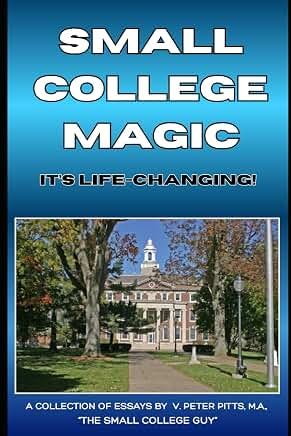
Small College Magic: It’s Life-Changing!: A collection of essays detailing how to navigate the small college search.

Cool Stuff at Small Colleges: A guide highlighting niche majors (like glass engineering, energy studies, and biomathematics) and unique academic structures (such as one-course-at-a-time terms or first-semester programs abroad).
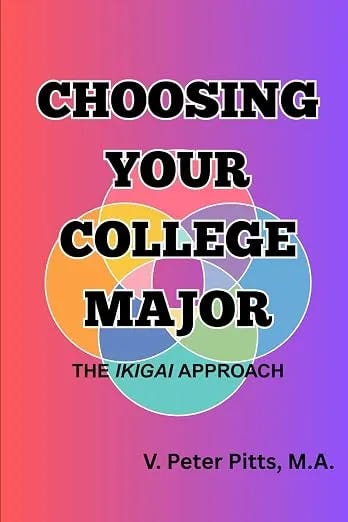
Choosing Your College Major: The Ikigai Approach: A framework for helping students align their personal interests, strengths, and career goals to select a college major.

333 Awesome Small Colleges: (that just might save you money): A directory and guide focused on identifying affordable, high-value small institutions.
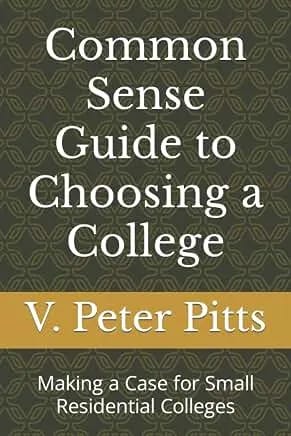
Common Sense Guide to Choosing a College: Making a Case for Small Residential Colleges: A handbook evaluating the practical advantages and long-term value of small residential campus environments.