
At the Vanguard: The Enduring Legacy of HBCUs and a New Look at Their Archives
Exploring the groundbreaking new exhibit at the National Museum of African American History and Culture

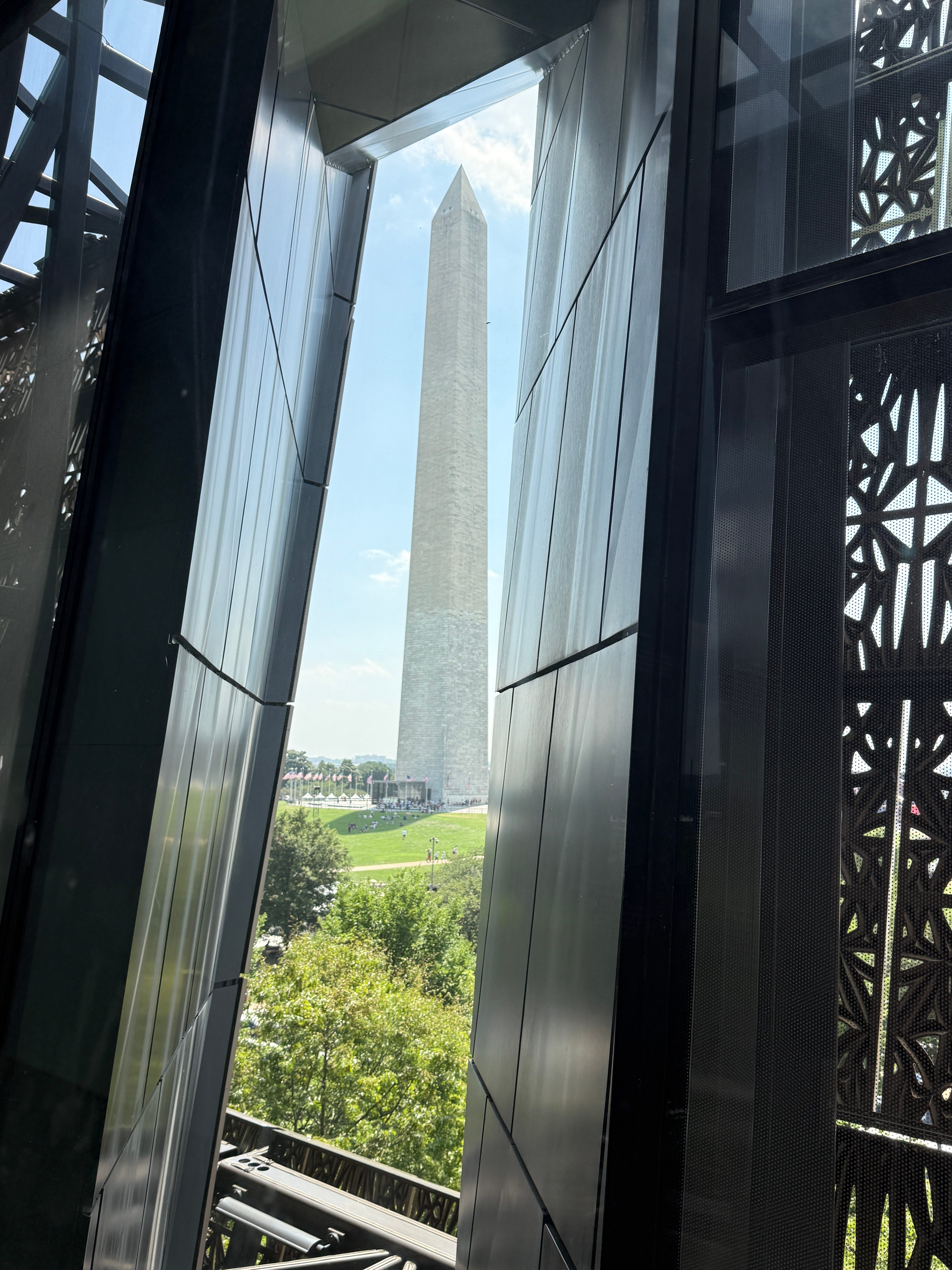
We arrived on the National Mall in Washington, D.C., just in time to see a flyover — one B2 escorted by two B1s. And then we heard the announcement: the Great American State Fair was closing down until 5 PM.
It was hotter and more humid than Bikram. We were hydrated and prepared, but decided to duck into a Smithsonian rather than wait out the entry delay in the heat. I’d never been to African American History & Culture, so we decided to go there.
We spent nearly four hours and still didn't see everything. That’s the thing about these museums — there’s Just. So. Much.
In Concourse C: At the Vanguard, Making and Saving History at HBCUs.
Historically Black Colleges and Universities (HBCUs) have long been the beating heart of Black intellectual excellence, artistic innovation, and social activism in the United States. This museum exhibit in Washington, D.C. shines a spotlight on these vital national engines.
A Short History of HBCUs: From Safe Havens to Cultural Powerhouses
Before the Civil War, higher education for African Americans was virtually nonexistent, save for a few pioneering institutions in the North, such as Cheyney University of Pennsylvania (founded in 1837) and Lincoln University (founded in 1854).
Following the abolition of slavery, a monumental shift began:
The Reconstruction Era (1865–1877): With the help of the Freedmen’s Bureau, Black churches, and private philanthropists, a wave of institutions emerged to educate newly emancipated citizens. Schools like Howard University, Morehouse College, and Clark Atlanta University were founded to provide foundational education and professional training.
The Second Morrill Act of 1890: This federal legislation mandated that states either integrate their existing land-grant universities or provide equitable funding for separate institutions for persons of color. This led to the creation of many public HBCUs dedicated to agriculture and mechanical arts.
The Engines of the Civil Rights Movement: In the mid-20th century, HBCU campuses became the strategic incubators for social change. From the Greensboro sit-ins launched by North Carolina A&T students to the Freedom Rides fueled by students from Fisk University and Jackson State, HBCUs were at the direct vanguard of dismantling Jim Crow.
Despite systemic underfunding across the decades, these institutions have disproportionately produced the nation’s Black doctors, lawyers, engineers, and cultural icons—proving that their value is completely interwoven into the fabric of American history.
Spotlight: “At the Vanguard” Exhibit at the National Museum of African American History & Culture
Open through July 19, 2026, this immersive exhibition turns the lens onto the institutions themselves as preservationists. Nearly two-thirds of HBCUs house their own campus museums, galleries, or archives. At the Vanguard brings together more than 100 rare objects, fine arts, and multimedia elements from five foundational partner universities:
What You’ll See at the Exhibit
“Instead of presenting archives as quiet storage, the exhibition treats them as active sites of care, decision-making, and cultural power.” — Black Art Magazine
The exhibition is built around vibrant soundscapes, bold graphics, and dynamic multimedia. Key historical highlights on display include:
The Bricks of Tuskegee: Original bricks handmade by students at Tuskegee University, which were used to build their own campus and literally serve as physical tuition payments.
Rare Audiovisual Gems: One of the few known color video recordings of legendary scientist George Washington Carver in action.
Literary Treasures: First-edition copies of author Margaret Walker’s foundational novel Jubilee and her poetry collection For My People (from the Jackson State University archives).
Art and Culture: Landmark artwork by John Biggers and Elizabeth Catlett, alongside a sea of colorful university banners and artifacts celebrating the vibrant culture of HBCU marching bands (like FAMU’s legendary “Marching 100”).
The exhibition serves as a powerful reminder that HBCUs didn’t just participate in American history—they had the foresight to document, protect, and pass it down when mainstream institutions looked away.
If you miss it in D.C. before it closes on July 19, 2026, the exhibition will begin a national tour through 2029, making its next stop at the Clark Atlanta University Art Museum in September 2026!


